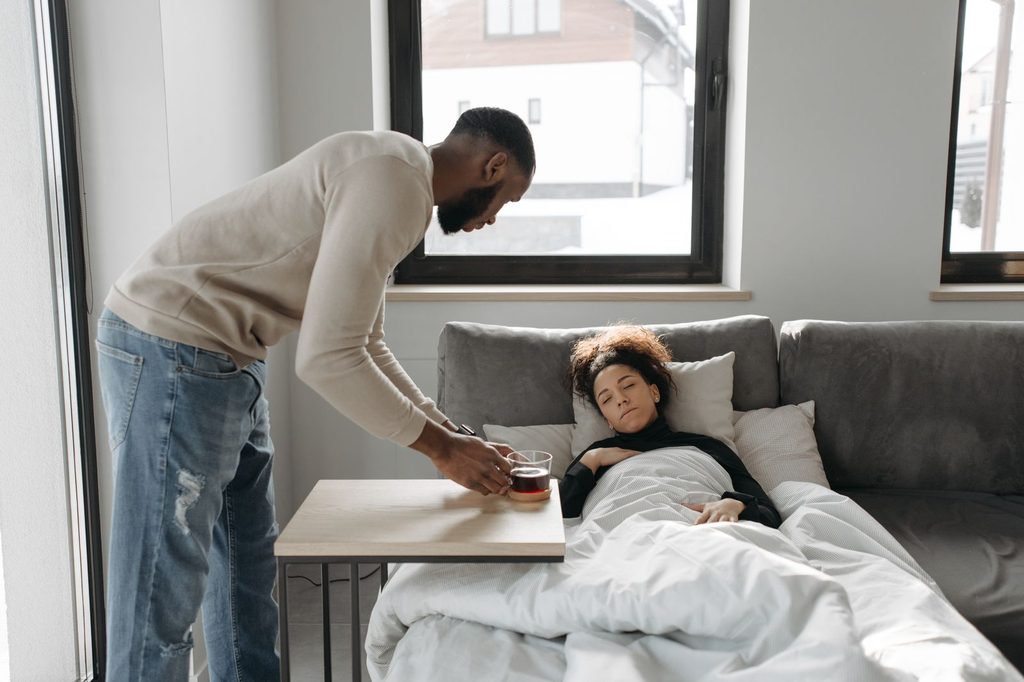
When you fall ill during a stay in Bratislava, the hardest part is often deciding where to go. In a foreign city you don't have your own doctor, you don't know which pharmacy is open, and you have no idea what your insurance will cover. There is no separate "doctor for tourists" service in Bratislava, but the Slovak system has clear levels: the pharmacy, the out-of-hours medical service, the hospital emergency department and the emergency medical service. This article walks you through them in the order in which you would choose between them, and also explains how to sort out insurance and accommodation if your stay is unexpectedly extended.
Article contents
- The first decision: how serious is it?
- When to call 155 and when to call 112
- When a pharmacy is enough
- The out-of-hours medical service: opening hours and how to find it
- The European Health Insurance Card and who pays for what
- When illness holds you up: accommodation and flights
- Frequently Asked Questions (FAQ)
- Sources
The First Decision: How Serious Is It?
Before you start looking up addresses, answer one question: is this life-threatening or not? Everything else depends on the answer. You never wait before calling an ambulance, and equally, you don't go to an out-of-hours clinic with a problem a pharmacist can solve. The table below sums up where each situation belongs, based on how the official sources describe it.
| Situation | Where to turn | When |
|---|---|---|
| Unconsciousness, breathing difficulties, chest pain, signs of a stroke, a serious injury or heavy bleeding | Call 155 or 112 | at any time, immediately |
| A sudden worsening of your condition that is not immediately life-threatening (high fever, severe ear or tooth pain, an infection) | Out-of-hours medical service | adults on weekdays from 16:00 to 22:00, on weekends and public holidays from 7:00 to 22:00 |
| The same problems, but outside out-of-hours service times | Hospital emergency department; if things get worse, call 155 | at night and outside surgery hours |
| A runny nose, a slight temperature, an upset stomach, a minor injury | A pharmacy and rest at the apartment | during opening hours; in the evening, an on-duty pharmacy |
| Toothache | Emergency dental service (part of the out-of-hours medical service) | according to the region's rota; check before you go |
If you are torn between two rows, go with the more serious one. The dispatcher on 155 will judge whether an ambulance crew is needed and, if not, will tell you where to go. An unnecessary call is a smaller problem than help that comes too late.
When to Call 155 and When to Call 112
In Slovakia both numbers work side by side, and both are free from landlines and mobiles with no dialling code. 155 goes straight to the emergency medical service, and according to the slovensko.sk government portal you should call it whenever there is a sudden threat to life or health, a serious injury or an accident with major consequences.[1] Typical cases include impaired consciousness, choking, a stroke, unusual chest pain or pressure, a serious injury, a fall or drowning.
112 is the single European number that connects you to the police, the ambulance service and the fire brigade, and it works in every EU country. For visitors from abroad one thing matters: according to the European Commission, the operator answers in the language of the country you are in, and whether they can also help you in English or another language depends on the local operators.[2] If you don't speak Slovak, start the call by stating clearly which language you can communicate in.
It helps to have the exact address of your accommodation to hand when you call, including the house number and the city district. You will find it in your booking confirmation or in the arrival instructions you received before check-in, and it is worth saving it in your phone as soon as you arrive, as we also recommend in the article First Steps After Arriving in Bratislava.
When a Pharmacy Is Enough
Most of the complaints that catch tourists out start at the pharmacy: a cold, a headache, an upset stomach after unfamiliar food, or blisters from a full day of walking on the cobblestones of the Old Town. The pharmacist will recommend an over-the-counter medicine and also tell you when your symptoms call for a doctor, which makes a useful first filter for a visitor.
In the evenings and on public holidays, medicines are dispensed by the on-duty pharmacy service, whose rota by district is published by the Bratislava Self-Governing Region on the e-VÚC portal. According to the same source, under an agreement between the region and the National Institute of Children's Diseases (NÚDCH), the public counter at the NÚDCH hospital pharmacy at Limbová 1 is open daily until 22:00.[3] Rotas change, so check the specific pharmacy before you set off.
If you take regular medication, bring enough for the whole stay plus a reserve, in the original packaging. A pharmacy may not give you a forgotten prescription medicine without a prescription, so that is a reason to see a doctor rather than a pharmacist.
The Out-of-Hours Medical Service: Opening Hours and How to Find It
The out-of-hours medical service, known locally as "pohotovosť", is a GP or dentist service for people whose condition suddenly gets worse at a time when regular surgeries are closed. For tourists it is the most common way to see a doctor, since they have no local GP in Bratislava. According to the Bratislava Self-Governing Region, the following hours apply:[4]
| Out-of-hours service | Weekdays | Weekends and public holidays |
|---|---|---|
| For adults | 16:00 to 22:00 | 7:00 to 22:00 |
| For children and adolescents | 16:00 to 20:00 | 8:00 to 20:00 |
The specific clinics and their addresses are set out in rotas that the region publishes for the districts Bratislava I to V, and they change, which is why we deliberately don't list them here as a fixed directory. You can find the nearest out-of-hours service on the e-VÚC portal in the Healthcare (Zdravotníctvo) section, where the region also points to the Otvorená lekáreň app, which uses your phone's location to show the nearest pharmacy, out-of-hours clinic and hospital.[4]
Outside these hours the out-of-hours service is closed, which leaves the hospital emergency department, intended for more serious conditions. If your condition is getting worse quickly, don't wait until morning; call 155. When you go to an out-of-hours clinic, take your ID, your insurance card and a list of the medicines you take.
If you fall ill on a public holiday, the out-of-hours service runs on its weekend schedule, but regular surgeries and some pharmacies are closed. You can find out which days are public holidays in Slovakia in the article Bratislava on Public Holidays.
The European Health Insurance Card and Who Pays for What
How much you pay for treatment depends on where you are from and what you have in your wallet. The slovensko.sk portal distinguishes three situations, and it is worth knowing which one applies to you before you travel.[5]
- Insured in the EU, the EEA or Switzerland, with a European card: during a short stay you are entitled to necessary healthcare on the same terms as people insured in Slovakia. Show your European Health Insurance Card when you are treated.
- Insured in the EU, without the card: you can ask your insurer for a provisional replacement certificate, through a doctor, a relative or your embassy. Until you have it, you pay the provider directly for treatment and claim the money back from your insurer at home.
- Visitors from outside the EU: you are entitled to urgent care, but you pay its full cost if your country has no social security agreement with Slovakia. If you have private insurance, you claim a refund from your insurer according to its terms.
The European Commission explicitly points out that the European card is not a substitute for travel insurance. It does not cover private healthcare or costs such as a flight back home, and it does not guarantee that treatment will be free.[6] That is why it is worth having both the card and travel insurance: the card works in public facilities and the insurance covers what the card does not.
Keep everything for a later claim: the medical report, bills from the clinic and receipts from the pharmacy. Information on cross-border healthcare is provided by the Health Care Surveillance Authority (Úrad pre dohľad nad zdravotnou starostlivosťou), which serves as Slovakia's national contact point.[7]
When Illness Holds You Up: Accommodation and Flights
Illness often means your departure slips by a day or two, and then timing is everything. Message your host through the booking messages as soon as you suspect you won't be able to leave on time, not on the morning of your departure. Whether your stay can be extended depends on whether the apartment is free for the following nights, and an early message gives you the best chance that it will be.
If your apartment is already booked, check the availability of our other apartments, for example CASTE on Zámocká in the Old Town or BRIS on Prístavná. When you are moving with a fever, it helps to be able to check in without waiting at a reception desk.
If illness makes you miss your flight, that is not a delay caused by the airline, so as a rule you are not entitled to compensation under the passenger rights rules. Arrange a change of ticket directly with the carrier, and claim the costs from your travel insurer according to the terms of your policy. What to do when the airline itself delays or cancels your flight is covered in the article Flight Delays and Cancellations in Bratislava.
Frequently Asked Questions (FAQ)
Where can a tourist see a doctor in Bratislava?
If your condition suddenly gets worse outside the opening hours of regular surgeries, go to the out-of-hours medical service. For adults it runs on weekdays from 16:00 to 22:00 and on weekends and public holidays from 7:00 to 22:00. The Bratislava Self-Governing Region publishes the current clinics on the e-VÚC portal. If someone's life is in danger, call 155 or 112.
Should I call 155 or 112?
Both numbers are free and work side by side. 155 goes straight to the emergency medical service, while 112 is the single European emergency number that also connects you to the police and fire brigade. The operator answers in Slovak, and whether they can also help you in another language depends on the local operators.
Is the European Health Insurance Card valid in Slovakia?
Yes. If you are insured in the EU, the EEA or Switzerland, during a short stay you are entitled to necessary healthcare on the same terms as people insured in Slovakia. According to the European Commission, however, the card does not replace travel insurance and does not cover private care or a flight back home.
Where can I buy medicine in Bratislava in the evening or on a public holiday?
At the on-duty pharmacy listed in the rota published by the Bratislava Self-Governing Region on the e-VÚC portal. According to the region, the public counter at the hospital pharmacy of the National Institute of Children's Diseases at Limbová 1 is open daily until 22:00. The rota changes, so check it before you set off.
Can I extend my stay if I get sick?
That depends on whether the apartment is free for the following nights. Message your host through the booking messages as soon as you suspect you won't be able to leave on time. If your apartment is already booked, you can find free nights in our other apartments on the Availability page.
Conclusion
Falling ill while travelling is unpleasant, but in Bratislava there is a clear procedure: 155 or 112 when a life is at risk, the out-of-hours service at set times when your condition suddenly gets worse, and a pharmacy for minor complaints. If you pack your European card and travel insurance before you leave and save the address of your accommodation in your phone when you arrive, you can handle most situations without unnecessary stress. If you need to stay longer to recover, take a look at all 8 apartments and their free nights.
Sources
- Ústredný portál verejnej správy (Slovak central public administration portal): services provided through the national emergency numbers (when to call 155 and 112). slovensko.sk (accessed October 2026).
- European Commission, Your Europe portal: frequently asked questions about emergencies and the 112 number (operator languages). europa.eu (accessed October 2026).
- Bratislavský samosprávny kraj (Bratislava Self-Governing Region), e-VÚC portal: on-duty pharmacy service in the region. e-vuc.sk (accessed October 2026).
- Bratislavský samosprávny kraj (Bratislava Self-Governing Region), e-VÚC portal: out-of-hours medical service in the region (opening hours, rotas by district). e-vuc.sk (accessed October 2026).
- Ústredný portál verejnej správy (Slovak central public administration portal): medical treatment of foreigners in Slovakia. slovensko.sk (accessed October 2026).
- European Commission: European Health Insurance Card (scope of cover and limitations). employment-social-affairs.ec.europa.eu (accessed October 2026).
- Úrad pre dohľad nad zdravotnou starostlivosťou (Health Care Surveillance Authority). udzs-sk.sk.
This article provides practical information for travellers and is not a substitute for medical advice. Out-of-hours clinic times, pharmacy rotas and insurance terms may change, so check them with the region, the provider or your insurer before your visit.