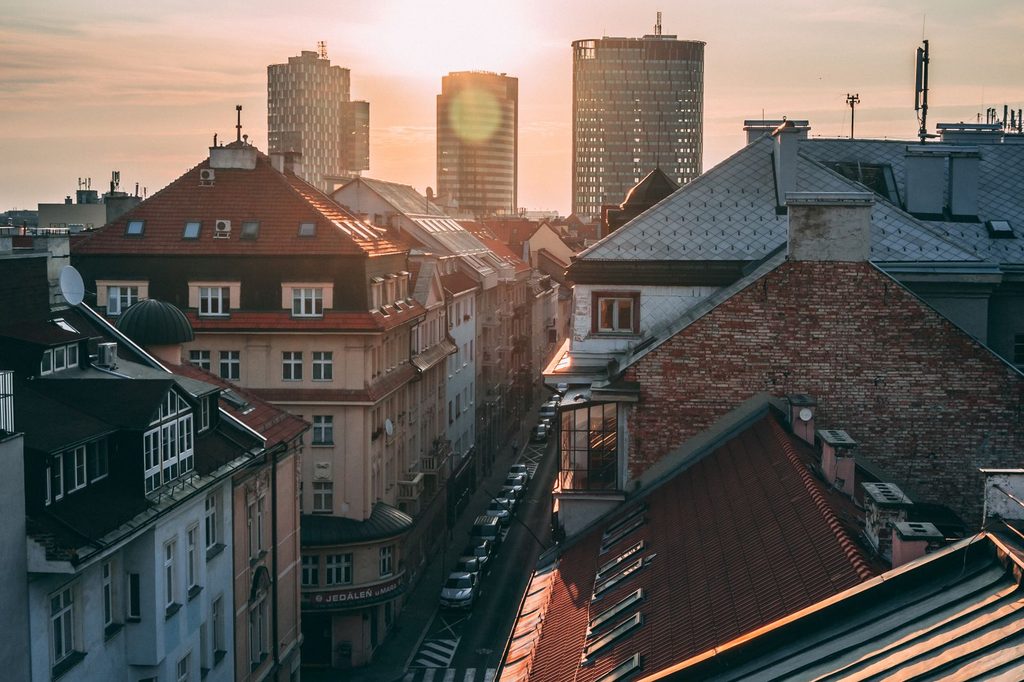
The question of what to see in Bratislava the second time has a different answer from the first trip, because you yourself are a different visitor. You have already photographed the castle, St Martin's Cathedral and the Main Square, so you are no longer looking for proof that you were in the city, but for something that surprises you. A 2026 study in the journal Current Issues in Tourism showed on a sample of 1,488 tourists that the road to satisfaction runs quite differently for people who seek new experiences than for those who want the proven classics, and that it is precisely the appetite for novelty that links an extraordinary experience with an emotional bond to a place.[1] This article is therefore built as a set of substitutes: for every place from your first visit, it offers a place that lies a little further out but gives you more of Bratislava than a repeat would.
Article contents
- How to plan a second visit: swap the familiar for the neighbouring
- Districts a first visit skips: Petržalka and Rača
- Views from the hills: Kamzík and Devínska Kobyla
- History off the main route: Gerulata and Chatam Sofer
- Day trips there was no time for the first time
- Come by the calendar: White Night and the grape harvest
- Where to stay the second time: a different district, a different view
- Frequently Asked Questions (FAQ)
- Sources
How to Plan a Second Visit: Swap the Familiar for the Neighbouring
The simplest way to plan a second stay is to take the list from your first visit and find a substitute for each item in the same category, just off the tourist trail. A view for a view, wine for coffee, Romans for Romans. That way you won't end up in the same circuit of lanes, yet you won't lose what you liked about the city the first time either. Everything in the table is reachable from the centre by public transport or by bike in roughly an hour, so you can manage without a car and without complicated logistics.
| You saw the first time | Try the second time | What you gain |
|---|---|---|
| Bratislava Castle and the view from it | Kamzík or the tower on Devínska Kobyla | You see the city from outside, from the forest and from over 400 metres up. |
| The Main Square and cafés in the centre | A wine cellar and the vineyard trail in Rača | You taste wine where it grows, and without the crowds. |
| Devín Castle | Gerulata in Rusovce | The second Roman footprint on the Danube, on the UNESCO list since 2021. |
| The Blue Church and St Martin's Cathedral | The Chatam Sofer Memorial | A chapter of the city's history that an ordinary tour only mentions. |
| The SNP Bridge and the UFO observation deck | The Petržalka embankment and Draždiak lake | The Danube from the other bank and swimming in the middle of a housing estate. |
| The Christmas markets | White Night or the Rača Grape Harvest | A different season, a different event, a different city. |
If you only managed the Old Town on your first visit, start with our overview of what to see in Bratislava and fill in what you missed. If you want to know how the city has changed since your last trip, for example the new riverfront or the Nivy station, that is covered in a separate article, Bratislava After the Years. This one is about a new itinerary, not about changes.
Districts a First Visit Skips: Petržalka and Rača
The two districts lie at opposite ends of Bratislava and each shows a different face of the city. Petržalka is the largest housing estate in Slovakia and at the same time a surprisingly green area by the water, while Rača is an old wine-growing village that the city gradually absorbed, though it kept its vineyards.
Petržalka: A Loop Along the Water
The city's tourist portal has put together a 14.5-kilometre cycling loop through Petržalka that can be done with breaks in about two hours. It runs on flat ground and a paved surface, with only eight percent of the route in traffic.[2] It starts at the Old Bridge and continues along the Chorvátske rameno, an old arm of the Danube where you can watch frogs, fish and even beavers. Along the way you pass the 1985 mural Peace, 450 square metres in size, which local volunteers restored after the apartment block was insulated, and about two kilometres to the south the Church of the Holy Family next to the Technopol high-rise.
The main destination is Veľký Draždiak lake, a former gravel pit from the days when the estate was built, today with beaches, clean water and a snack bar where you can get a lángoš or a Kofola. Behind the hospital on Antolská, the BS-13 bunker nicknamed Stoh, part of the pre-Second World War fortifications, is hidden in the bushes, and next to the University of Economics stands the largest sundial in Slovakia, dating from 1986, which also serves as a climbing wall. You return to the centre along the Petržalka embankment, which carries the international EuroVelo 6 cycle route.[2] On foot, pick the section from the Old Bridge to Draždiak; for a bike or a scooter, see the article Bike or Scooter in Bratislava. Sad Janka Kráľa park, right next to the Old Bridge, makes a good start or finish to the route.
Rača: Wine Where It Grows
Rača is one of the best-known wine-growing areas within the city limits and its tradition is still alive, because local winemakers regularly open their cellars and vineyards to visitors. The Rača vineyard trail connects the city streets with the forests and vineyards of the Small Carpathians, can be walked or cycled, and offers views of the city and of the countryside beyond it. Along the way people tend to stop for a glass of wine at a viecha, a seasonal tap room run directly by the winemaker. The tourist portal also recommends the route To the Forests and Vineyards, which leads from Račianske mýto to the centre of Rača.[3]
Rača is a good choice for anyone who would like to taste Small Carpathian wine but doesn't want to give up a whole day for a trip to Pezinok or Modra. If you want to go further beyond the city limits, continue with the article Wineries Near Bratislava, which covers the whole Small Carpathian Wine Route from Svätý Jur to Trnava. The opening days of the wine cellars change with the season, so check them with the specific winemaker before you visit.
Views from the Hills: Kamzík and Devínska Kobyla
From the castle you saw the Danube and Petržalka, but the city itself with the castle in the frame can only be seen from the Small Carpathians, which rise directly behind the last row of houses. Two hills are best for this, each from a different side.
Kamzík: The TV Tower and the Chairlift
Kamzík, at 439 metres, is the best-known point of Koliba and the Bratislava forest park. On the ridge stands the TV tower with a revolving restaurant, right next to it is a 15-metre wooden lookout tower, and a chairlift runs from Kamzík down to Železná studnička, so you can walk up and ride down, or the other way round.[4] The chairlift runs seasonally, so check whether it is operating before you go. Marked hiking trails and mountain bike routes run along the ridge, and there is an outdoor fitness park, which makes Kamzík a good half day for anyone who wants a stretch of forest after two days in the streets. The lower station and the valley are described in the article Železná studienka and the Bratislava Forest Park.
Devínska Kobyla: A Tower with a View of Three Countries
At the opposite end of the city, the lookout tower on Devínska Kobyla has stood since July 2020, at 514 metres above sea level, on the site of a former missile base at a crossroads of hiking trails. The tower is 21 metres tall, 112 steps lead to the top, and the Devínska Nová Ves district, which built it, charges no entrance fee.[5] You can only reach it on foot or by bike: along the green trail from Devínska Nová Ves, the yellow from Dúbravka, the blue from Dlhé diely or the red from Devín Castle. In clear weather you can see Vienna and the Alps from there. On the way there or back it is worth a detour to the Sandberg sandstone outcrop with fossils from a Tertiary sea, which has its own article, Sandberg and Devínska Kobyla. An overview of all the views of the city, including the paid ones, is in the article The Best Views and Viewpoints in Bratislava.
History Off the Main Route: Gerulata and Chatam Sofer
On your first visit you walked the coronation route and the castle, but Bratislava has two historical layers that an ordinary tour mentions in a single sentence at most: the Roman frontier on the Danube and Jewish Pressburg.
Ancient Gerulata in Rusovce
Gerulata was a Roman military camp from the end of the first century on the frontier of the empire, and since 2021 it has been part, together with the camp at Iža, of the transnational UNESCO listing called Frontiers of the Roman Empire, the Danube Limes, western segment.[6] The site has been managed by the Bratislava City Museum since 1987, and today you can see the foundations of buildings from the second to fourth centuries, a lapidarium with gravestones and reliefs, and an exhibition of weapons, pottery, jewellery and coins. In spring they plant species known in antiquity, such as rosemary and olive trees, and visitors are said to be greeted by Alex the parrot.[7] The museum operates seasonally, as summarised in the table. It is closed on Mondays all year round, and Bratislava CARD holders get in free; check other ticket prices on the museum's website.
| Period | Days | Hours |
|---|---|---|
| April | Thursday to Sunday | 10:00 to 17:00 |
| May to September | Tuesday to Sunday | 10:00 to 18:00 |
| October | Thursday to Sunday | 10:00 to 17:00 |
| November to March | the city portal does not list hours; check at muzeumbratislava.sk | |
You can get to Rusovce by city bus or by bike along the Danube embankment, which also makes a pleasant continuation of the Petržalka loop from the previous section. The Roman theme is completed by Devín Castle, where the Romans had a watch station at the other end of today's city.
The Chatam Sofer Memorial
Below the castle hill, at Nábrežie armádneho generála Ludvíka Svobodu 24, lies a memorial to Rabbi Moses Schreiber, known as Chatam Sofer, who was the chief rabbi of Pressburg in the 19th century and one of the most important figures of European Judaism. Of the original Jewish cemetery, destroyed in 1943, 23 graves remain, including his, and between 2000 and 2002 a new complex was built over them to a design by the architect Martin Kvasnica, which has also served as a prayer room since 2002.[8] A visit must be arranged in advance by phone or e-mail with the caretaker; the contact details are on the city's tourist portal. As it is an active sacred site, appropriate clothing is expected and men cover their heads. If you want to continue the theme indoors, you will find more tips in the article Museums and Galleries in Bratislava.
Day Trips There Was No Time for the First Time
On a first visit, the day trip usually narrows down to Devín or Vienna, because both are well known and simple. The second time you have room for destinations that are just as close but less obvious. Each can be done in half a day to a day, and for each we have a detailed guide with transport and times:
- Hainburg: the nearest Austrian town, with a ruined castle above the Danube, which you can also reach by bike.
- Svätý Jur: a wine-growing town at the foot of the Small Carpathians with the Šúr nature reserve, reachable by train.
- Modra: ceramics, Štúr and the lookout on Veľká homoľa, if you liked Rača and want more wine.
- Schloss Hof: a baroque palace with gardens just across the Morava, from Devínska Nová Ves via the Freedom Cycling Bridge.
- Trips by train: an overview of destinations by railway line, if you don't want to deal with a car or a return connection.
The complete list of destinations with a comparison of transport is in the article Day Trips from Bratislava. If you are in the city for longer the second time, the plan Bratislava in 3 Days will help you spread out the city and the trips.
Come by the Calendar: White Night and the Grape Harvest
The surest way to turn a second visit into a different experience is to come in a different season and tie your stay to an event. Two of them are typical of autumn, when a first visit rarely takes place.
White Night (Biela noc) is the largest festival of contemporary art in Slovakia and part of the European Nuit Blanche network. For one weekend it turns the streets of Bratislava into a night-time gallery with light installations, digital art and music. In 2026 its twelfth edition took place from 2 to 4 October, from 19:00 to midnight each day.[9] Check the date of the next edition on the festival's website or in the calendar of the city's tourist portal.
The Rača Grape Harvest (Račianske vinobranie) is the biggest event of the year in Rača and takes place on the second weekend of September, from Friday to Sunday. The main programme runs in the amphitheatre in Knižkova dolina, on Saturday afternoon an allegorical parade passes through the village, winemakers present the mayor with a wreath from the harvest, and there are competitions for the finest bunch of grapes and the best young wine. According to the organisers, more than 150,000 visitors come every year, so expect crowds and book your accommodation in advance.[10] Check the exact date and programme of the current edition before you travel, as the portal page shows details from previous years.
A year-round overview of the types of events is in the article Festivals and Events in Bratislava, and the comparison When to Visit Bratislava will help you choose a month. If your first visit was in winter, also read Bratislava in Autumn, where both of the events mentioned belong.
Where to Stay the Second Time: A Different District, a Different View
On a first visit most guests want to stay in the centre, which makes sense when the Old Town is the goal. On a second visit with the itinerary from this article, however, it pays to move to the side of the city where you will spend most of your time, because you save on commuting and get to know the district in the evening too, once the tourists have left. Three apartments from our portfolio suit this:
- LUCAO in Dúbravka: a two-room apartment of 55 m² in a quiet new building, with a balcony, air conditioning and free parking, a shop across the street and Devínska Kobyla nearby, reached from Dúbravka along the yellow trail. For 1 to 4 people.
- FIAOR in Petržalka: a 35 m² apartment in Slnečnice, with a balcony, air conditioning and free parking, a quick trip over the bridge to the centre. A good base for the loop along the Chorvátske rameno and Draždiak. For 1 to 2 people.
- BRIS on Prístavná: a 40 m² apartment in the riverfront business district by Eurovea, with a balcony and air conditioning, a few minutes' walk from the Danube promenade and from the Old Bridge, where the Petržalka loop begins. For 1 to 2 people.
All 8 apartments have self check-in and parking included in the price, so when you come back late from White Night or from a wine cellar you are not waiting for a reception desk. Whether it is worth staying in the centre or on the outskirts is discussed in the comparison Centre or Outskirts of Bratislava, and a description of the individual districts is in the article Best Locations for Accommodation in Bratislava.
Frequently Asked Questions (FAQ)
What should I see in Bratislava on a second visit, when I already know the castle and the Old Town?
Swap the familiar places for their less visited counterparts: instead of the castle, the view from Kamzík or from the tower on Devínska Kobyla; instead of the cafés in the centre, a wine cellar in Rača; instead of Devín, Roman Gerulata in Rusovce; and instead of the SNP Bridge, a walk or a ride along the Petržalka embankment to Draždiak lake. Each of these places is within an hour of the centre by public transport or by bike.
Is Petržalka worth visiting as a tourist?
Yes, if you treat it as a walk by the water rather than a tour of monuments. The city's tourist portal recommends a flat 14.5-kilometre loop that runs along the Chorvátske rameno channel to Veľký Draždiak lake and back along the Danube embankment, passing a bunker from the interwar period and the largest sundial in Slovakia on the way. On foot, pick a shorter section; by bike you can do the whole loop in about two hours.
How do I get to the lookout tower on Devínska Kobyla, and is there an entrance fee?
The tower stands at 514 metres above sea level, is 21 metres tall and has 112 steps. There is no entrance fee; the Devínska Nová Ves district did not charge one when it opened in July 2020. You can only reach it on foot or by bike along marked trails from Devínska Nová Ves, Dúbravka, Dlhé diely or from Devín Castle. Before you set out, check that access is not temporarily restricted, for example in winter.
Can I visit the Chatam Sofer Memorial without booking?
No. According to the city's tourist portal, a visit must be arranged in advance by phone or e-mail with the memorial's caretaker. It is an active sacred site that has also served as a prayer room since 2002, so appropriate clothing is expected and men cover their heads. The memorial stands at Nábrežie armádneho generála Ludvíka Svobodu 24, below the castle hill by the Danube.
When should I come to Bratislava the second time to experience something new?
Choose a different season from your first visit. If you came for the Christmas markets, come in September for the Rača Grape Harvest, which is usually held on the second weekend of September, or in early October for White Night, a festival of contemporary art in the city streets. In 2026, White Night took place from 2 to 4 October, from 19:00 to midnight each day. Check the dates of the next edition in the events calendar at visitbratislava.com.
Conclusion
A second visit to Bratislava is not a repeat but an extension: the city you first saw from the castle, you now look at from Kamzík or Devínska Kobyla, you taste the wine in Rača instead of a bar on the square, and you add Gerulata to Devín. Add an event in a different season and an apartment in the district where you will spend your time, and you get a completely different stay out of the same city. Take a look at all 8 apartments and this time choose a different part of Bratislava.
Sources
- Lança, M., Pereira, L. N., Silva, J. A., Andraz, J., & Nunes, R. (2026). From destination attributes to tourist satisfaction: novelty-seeking as a bridge between liminality and place attachment. Current Issues in Tourism, 1 až 19. doi.org/10.1080/13683500.2026.2625246.
- Visit Bratislava: The Petržalka Loop, a cycling loop with waypoints, length and time. visitbratislava.com (accessed October 2026).
- Visit Bratislava: Bratislava, a city with a wine soul (Rača, the Rača vineyard trail, the Small Carpathian Wine Route). new.visitbratislava.com.
- Visit Bratislava: Kamzík (altitude, TV tower, lookout tower, chairlift to Železná studnička). visitbratislava.com.
- TASR (15 July 2020): Vyhliadkovú vežu na Devínskej Kobyle sprístupnia verejnosti, the lookout tower on Devínska Kobyla opens to the public (21 m tall, 112 steps, 514 m above sea level, no entrance fee). teraz.sk.
- TASR (30 July 2021): MMB: Gerulata si zápis do zoznamu svetového dedičstva UNESCO zaslúži, the Bratislava City Museum on Gerulata's UNESCO World Heritage listing (Frontiers of the Roman Empire, the Danube Limes, western segment). teraz.sk.
- Visit Bratislava: Ancient Gerulata Rusovce (exhibition, seasonal opening hours, Bratislava CARD). visitbratislava.com (accessed October 2026).
- Visit Bratislava: Chatam Sofer Memorial (history, 23 preserved graves, visits by appointment, address). visitbratislava.com.
- Visit Bratislava: Biela noc Bratislava 2026 (12th edition, 2 to 4 October 2026, 19:00 to midnight). visitbratislava.com.
- Visit Bratislava: Rača Grape Harvest (programme, venue, attendance according to the organisers). visitbratislava.com.
Opening hours, chairlift operation, event dates and visiting conditions can change, so check them on the website of the specific place or event before your trip.